You can do better than the coffee shop

The 3 keys to be better than the coffee shop

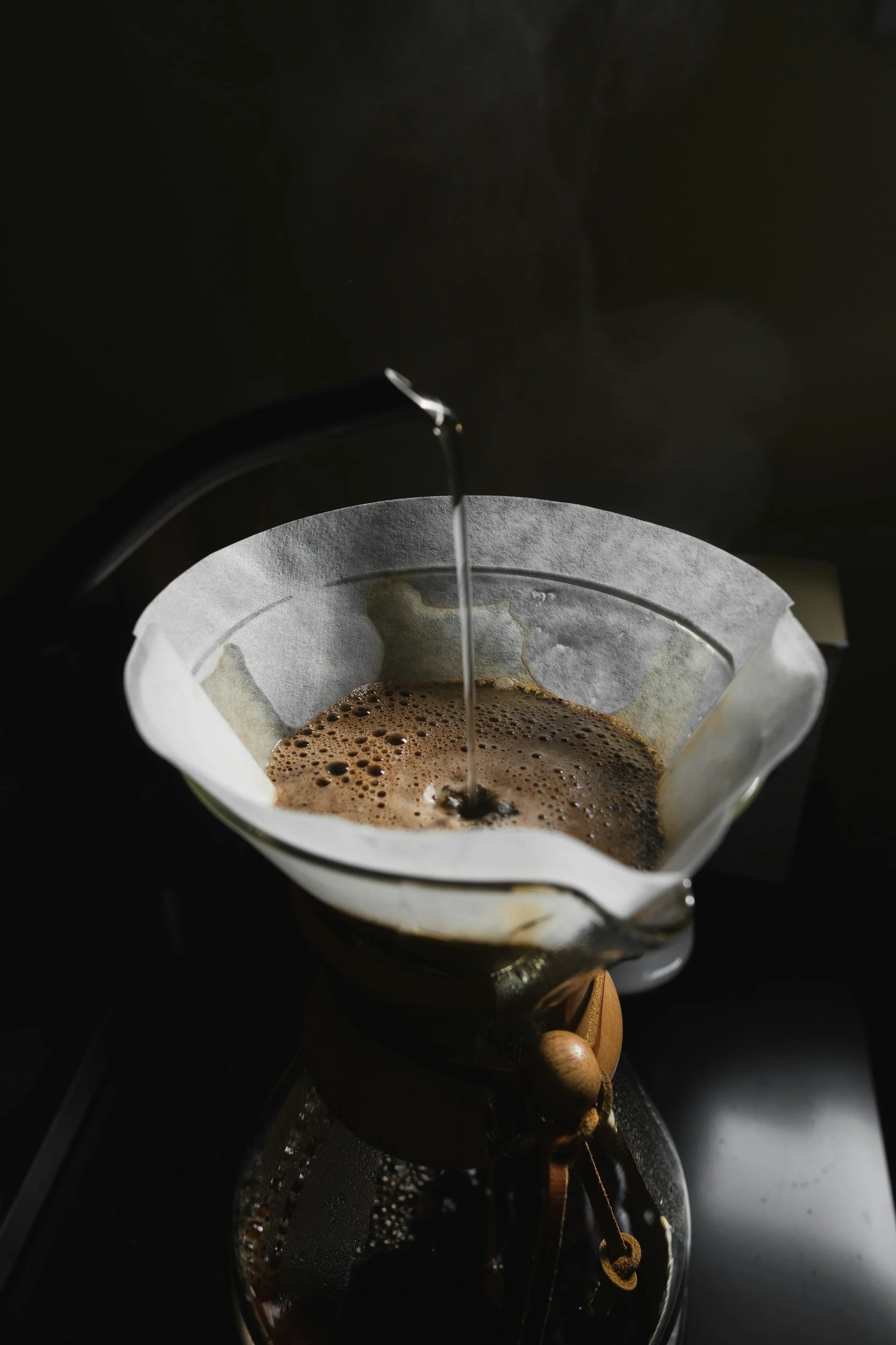
  • Pour-over coffee brewing in a Chemex with hot water being poured from a gooseneck kettle.

    Brewing

    Dive into this simple guide on coffee brewing. Great coffee isn’t hard. You simply need to know and follow the methods that consistently give amazing coffee. They can all be done right from your own kitchen.

  • A top view of a coffee grinder containing partially ground coffee beans, with a bag of coffee and a portafilter on a wooden surface.

    Grinding

    Learn why the size and consistency of your coffee grounds can make or break your brew. Different brews need different grinds. Everything you need to know is right here in this simple guide.

  • Hand holding a glass being filled with water from a kitchen faucet over a sink.

    Water

    The simplest ingredient in coffee might just be your hidden issue causing disappointing brews. Think it can’t be that big of a problem? Think again. It’s one of the last secrets of amazing coffee, and it doesn’t have to be hard.

Frequently Asked Questions

How much caffeine is actually in coffee? (And does it vary a lot?)

A typical 8-ounce cup of brewed coffee has about 80–120 mg of caffeine, depending on the beans, brew method, and strength. It varies some—espresso shots pack more per ounce but less overall volume, while drip can differ by grind and ratio. The buzz isn't huge from cup to cup if you brew consistently. Great fact to share on your site for folks watching their intake!

Does light roast or dark roast have more caffeine?

Light roast edges out with a tiny bit more caffeine per bean or per gram because darker roasts lose a small amount during the longer roast time. But the difference is really small—often just a few percent—and way less important than flavor. By weight or scoop, it's basically the same kick either way.

Does decaf still have caffeine?

Decaf isn't 100% caffeine-free. There are many ways to decaffeinate coffee, and methods must remove at least 97% of caffeine to be labeled “Decaf”. There are two processes most commonly used in high-grade coffee. Swiss Water Process gets closer to 99.9% removal and Ethyl Acetate removes 97-98%. In either case, it's super low, so it's perfect if you want the taste without a buzz. Awesome option for evening drinkers or sensitive folks!

Is coffee good or bad for you? / How much is too much in a day?

Coffee's mostly good in moderation—it's loaded with antioxidants and linked to better focus, mood, and even some health perks like lower risks for certain issues. Too much (over 400 mg caffeine a day, about 3–4 cups) can cause jitters, sleep trouble, or stomach upset for some people. Some heart conditions may require less caffeine, so talk to your doctor.

What's the best way to brew coffee?

There's no single "best" method—pour-over, French press, AeroPress, and others all work great when done right. Many experts love pour-over for clean, bright flavors with good control, or a Clever Dripper for ease of use and forgiving results. French press shines for full body if you use our recipe to cut silt. Pick what fits your taste and gear, then focus on consistent technique for tasty cups every time.

How much coffee should I use per cup? (The classic ratio debates)

A good starting point is 1 part coffee to 16–17 parts water by weight—like 20g coffee for 320–340g water. This hits a balanced strength (around 1.2–1.4% TDS) without being too weak or strong. Tighter ratios (like 1:15) boost intensity for some, while bigger ratios (1:17) give higher extraction and clarity. Adjust based on your roast and preference for the perfect cup.

What's the ideal water temperature and grind size?

Water at 190–199°F works best for most brews—hotter helps pull out flavors from light roasts, cooler suits darker ones to avoid harsh notes. Grind size depends on method: medium-fine for French Press, medium for pour-over, coarser forAeroPress to avoid muddiness. Start there and tweak finer if sour (under-extracted) or coarser if bitter.

Why does my home coffee never taste as good as the café?

Cafés often nail consistency with fresh beans, precise gear, dialed-in recipes, and great water—home setups miss that sometimes. Common fixes: use fresher beans (1–4 weeks post-roast), accurate scale/timer, better grinder for even particles, proper ratios/temps, and avoid channeling with good prep.

What's the difference between a latte, cappuccino, flat white, and cortado?

These milk-based espresso drinks differ mainly in milk-to-espresso ratios and foam.

  • Latte: Mostly milk (often 1:5 or 1:6 espresso-to-milk), steamed milk with a thin foam layer—creamy and mild.

  • Cappuccino: European Style is 1:1:1 Espresso, milk, and foam. Specialty style is about 1:4 espresso-to-milk with a small amount of foam.

  • Flat white: Stronger (about 1:2 or 1:3 espresso-to-milk), velvety microfoam with little volume—smooth and robust.

  • Cortado: Short and equal (1:1 espresso-to-steamed milk), minimal or no foam—bold, balanced sip. Great for menus: Pick based on how milky or intense you want it!

What's the difference between espresso and regular coffee?

Espresso is a concentrated shot (1-2 oz) pulled quickly under high pressure through fine grounds—intense flavor, thick crema, high extraction per sip.
Regular coffee (drip, pour-over, or filter) uses coarser grounds, more water, and longer brew time for a milder, larger cup (6-12 oz) with lighter body and subtler notes. Espresso delivers bold punch; regular coffee is easier-drinking and highlights gentle flavors. Both shine with fresh roasts!

Arabica vs. Robusta—what's better and why?

Arabica is generally better for specialty coffee—smoother, sweeter, with brighter, complex flavors (fruit, chocolate) and lower bitterness.
Robusta has double the caffeine, bolder/earthier taste, more body, but often harsher woody or grainy notes.
High-quality roasters use Arabica for cleaner, more attractive cups. Robusta suits cheap strength-focused blends or sustainability needs, but Arabica wins for premium taste.

Single-origin vs. blends—what should I pick?

Single-origin highlights one farm/region's unique profile (e.g., fruity Ethiopian or nutty Colombian)—great for exploring specific flavor notes.
Blends mix beans from different spots for reliable, balanced flavor—great for a consistent daily sipper.
Choose single-origin for local characteristics and to discover fun tastes; go for blends for everyday favorites that stay the same. Both work perfectly with fresh roasts!

When should I buy coffee based on roast date?

Buy coffee within a week of roasting. Coffee is best 1–4 weeks after the roast date for peak flavor. Light roasts often taste best after resting 2–3 weeks to allow CO2 to degas and flavors to settle fully. Bags roasted less than 1 week ago can taste flat or astringent due to excess carbon dioxide; after 4–6 weeks, brightness and complexity start to fade noticeably. Always check the roast date on the bag and target that sweet spot for the freshest, most vibrant cup.

How does origin, altitude, or processing method change the flavor?

Origin helps define the coffee’s foundational characteristics through soil, weather, elevation, and microbial activity.
Altitude- higher altitudes (typically above 1,200–1,500 meters) produce denser beans with brighter acidity, more pronounced fruit or floral notes, and greater complexity because cooler temperatures slow ripening. Lower altitude (especially under 1,000 meters) causes a big change in how coffee cherries develop leading to lower acidity and other compounds (like C5HTs) that may be easier on digestion.
Processing method shapes the profile: washed processing yields clean, crisp flavors that highlight the bean’s origin characteristics; natural (dry) processing adds bold fruit, sweetness, or fermenty notes; honey or pulped natural methods fall in between, offering extra body and subtle fruit. Higher-altitude washed coffees often taste bright and juicy, while lower-altitude naturals lean toward chocolatey or nutty depth. Wet-hulled coffees are more rustic and vegetal.

What's the deal with fair trade, direct trade, or organic labels?

Fair trade ensures minimum prices and worker standards through certified systems, supporting farmers but usually adds extra costs without improving cup quality.
Direct trade involves roasters purchasing straight from producers, often at premium prices, for stronger relationships, greater transparency, and frequently higher-quality beans due to closer oversight.
Organic certification means no synthetic pesticides or fertilizers were used, promoting cleaner farming practices. Quite a bit of high-grade specialty coffee is grown with little to no pesticides or fertilizers, but the cost of the certification is too expensive for small farms to obtain.

None of these labels guarantee great taste on their own. They are intended to support ethical and sustainable supply chains. For taste, focus on origin, roast level, and freshness from a brand you trust.

How do I store coffee beans/grounds to keep them fresh?

Store whole beans in an airtight container (vacuum-sealed is ideal) away from light, heat, oxygen, and moisture to slow oxidation and flavor loss. For short-term (weeks), keep at cool room temperature after resting. For longer-term (months+), portion into small airtight/vacuum bags and freeze—experts like Scott Rao, James Hoffmann, and Lance Hedrick agree this dramatically slows staling if done right (no repeated thaw/refreeze, avoid freezer odors/moisture by sealing well). Grind only fresh each time; ground coffee stales much faster.

Why is my coffee sometimes bitter / sour / weak?

  • Sour typically means under-extraction: insufficient solubles extracted—use finer grind, hotter water (195–205°F), longer brew time, or better agitation for even saturation (Scott Rao and James Hoffmann emphasize this for balanced yield ~18–22%).

  • Bitter/astringent often from uneven extraction/channeling (not true over-extraction): water rushes through paths, pulling harsh compounds—reduce fines (better grinder), improve prep/distribution/tamping (Lance Hedrick stresses this for filter/espresso).

  • Weak from low concentration: too coarse grind, excess water (beyond 1:16–1:17 ratio), or low dose—focus on uniform flow and proper ratios for strength without defects.

What's a good starter setup if I'm getting more serious about coffee?

Prioritize a quality burr grinder first (consistent particles key for even extraction—Rao/Hoffmann/Hedrick all call this the biggest upgrade). Add a digital scale (0.1g accuracy), gooseneck kettle for controlled pouring, and a simple brewer like Hario V60 pour-over or Clever Dripper for easy dialing in. Use filtered water, fresh beans (rested 1–4 weeks), and 1:16–1:17 ratio at 195–205°F. This lets you control variables precisely and taste clear improvements without high-end gear upfront.